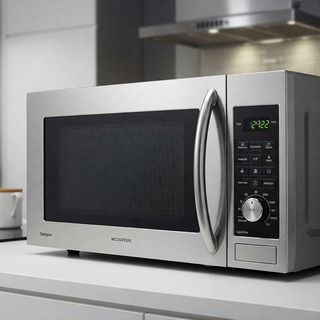
Microwaves are a kitchen staple, known for their speed and convenience—but how exactly do they heat food?
The Science Behind It
Microwave ovens use electromagnetic waves called microwaves, which fall between radio waves and infrared radiation on the electromagnetic spectrum. These waves specifically target water, fat, and sugar molecules in food.
When the microwave is turned on, it generates microwaves through a component called a magnetron. These waves penetrate the food and cause the polar molecules—especially water—to rapidly rotate back and forth. This molecular motion produces friction, which generates heat. The heat then spreads throughout the food, warming it up.
Key Points
- Microwaves excite water molecules: These molecules absorb the energy and start vibrating, creating heat.
- Heating starts from the inside: Contrary to popular belief, microwaves often heat food from the outside in, but the energy can penetrate a few centimeters depending on the food’s composition.
- Not all containers are microwave-safe: Metals reflect microwaves, while some plastics may melt or leach chemicals. Always use containers labeled “microwave-safe.”
Why Does Food Heat Unevenly?
Microwaves can create hot and cold spots due to the way the waves bounce around inside the oven. That’s why most microwaves have a turntable to rotate food, helping it cook more evenly.
Final Thoughts
Microwave ovens are an efficient way to heat food quickly by agitating water molecules with electromagnetic waves. While they don’t brown or crisp food like a conventional oven, their speed and simplicity make them ideal for reheating, defrosting, or even cooking certain dishes.
 Answer Shelf
Leave a comment