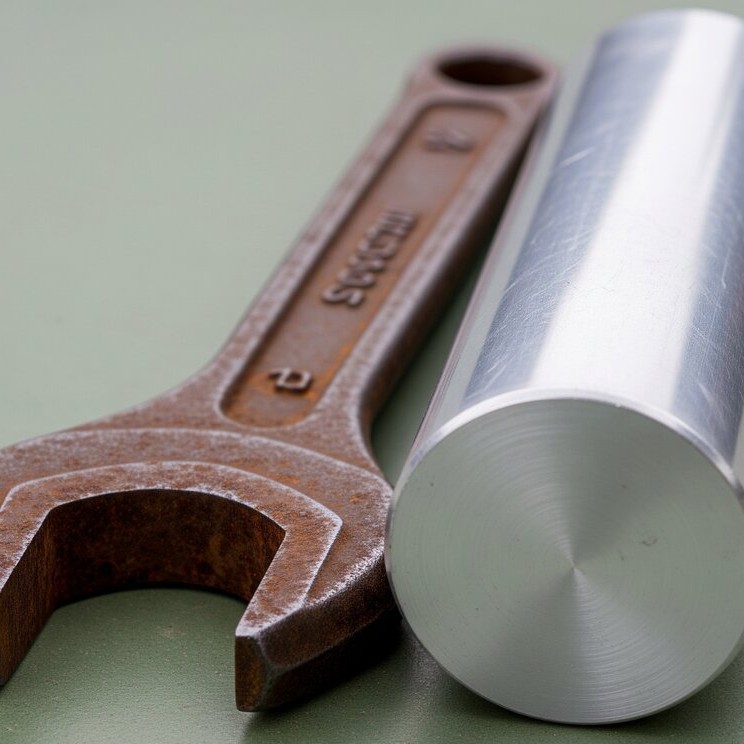
If you’ve ever left a bicycle out in the rain, you’ve probably seen reddish-brown rust form on its iron parts. Yet aluminum objects left outside seem to remain largely unchanged. So why does iron rust, but aluminum doesn’t seem to? The answer lies in the chemistry of corrosion and how these metals react with oxygen and water.
What Is Rust?
Rust is the common name for iron oxide, a flaky, reddish substance that forms when iron reacts with oxygen and moisture. The process is known as oxidation. In particular, iron reacts with both oxygen (O₂) and water (H₂O) from the environment to produce iron oxide (Fe₂O₃·nH₂O), which we recognize as rust.
The overall chemical reaction looks like this:
4Fe + 3O₂ + 6H₂O → 4Fe(OH)₃ → Fe₂O₃·nH₂O (rust)
Rust is porous and weak, so it flakes off, exposing more fresh iron to the environment. This allows the rusting process to continue indefinitely.
Why Doesn’t Aluminum Rust?
Aluminum actually does oxidize, but it doesn’t rust in the way iron does. When aluminum comes into contact with oxygen, it forms aluminum oxide (Al₂O₃). The key difference is that this aluminum oxide layer is thin, hard, and tightly bonded to the surface. Instead of flaking off like rust, this protective layer seals the metal underneath from further corrosion.
In short, aluminum “rusts” in its own way. However, the oxidation actually protects it. This process is called passivation.
The Role of Passivation
Passivation is what sets aluminum apart from iron. The oxide layer that forms on aluminum is only a few nanometers thick, but it is incredibly strong. It acts like an invisible shield that prevents moisture and air from reaching the metal below.
Iron, on the other hand, forms a non-protective oxide layer. As rust flakes off, fresh iron is exposed to the elements, and the cycle continues.
Can Aluminum Corrode?
Yes, aluminum can still corrode under certain conditions, such as in the presence of salt water or acidic environments. In such cases, corrosion may appear as pitting, which refers to small, localized holes in the metal. However, this is far less aggressive than the widespread, structural damage caused by iron rusting.
Protective Measures
To prevent rust, iron is often coated with paint, oil, or even zinc. This last method is called galvanization. Aluminum usually doesn’t need these protections for general use, although anodizing is sometimes done to thicken the protective oxide layer for added durability or aesthetic appeal.
Summary
Iron rusts because it forms a weak, flaky oxide layer that does not protect the metal underneath. Aluminum doesn’t rust the same way because its oxide layer is strong and acts as a barrier. Understanding these differences helps engineers and builders choose the right materials for everything from airplanes to garden furniture.
 Answer Shelf
Leave a comment