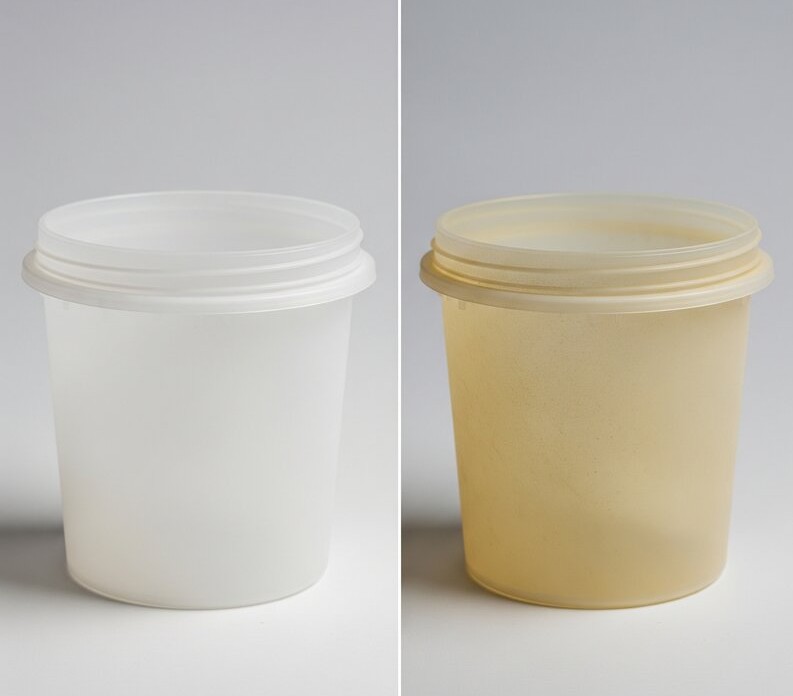
If you’ve ever noticed a once-clear plastic item turn an unsightly shade of yellow, you’re not alone. From old electronics and kitchen containers to vintage toys and appliances, plastic discoloration is a common issue. But what causes this yellowing over time?
The Science Behind the Yellowing
The yellowing of plastic is primarily due to oxidation and UV light exposure. Many plastics, especially older ones like ABS (acrylonitrile butadiene styrene) and polycarbonate, contain chemical additives that break down when exposed to oxygen and sunlight.
When ultraviolet (UV) rays hit the plastic surface, they trigger a chemical reaction that alters the molecular structure. This process is called photo-oxidation. Over time, the plastic’s polymer chains degrade and react with oxygen in the air, producing yellow-colored byproducts that become trapped in the material.
Contributing Factors
- UV Exposure: Sunlight is the most powerful contributor. Even indirect exposure through windows can affect indoor plastics.
- Heat: Elevated temperatures can accelerate the chemical reactions that lead to yellowing.
- Ozone and Pollutants: Air pollutants and ozone can react with plastic surfaces, hastening the discoloration.
- Plastic Composition: Some plastics are more prone to yellowing depending on their additives and stabilizers. Cheaper or older formulations are often less resistant.
Can You Reverse the Yellowing?
In some cases, yes—at least temporarily. DIY methods like using hydrogen peroxide baths and UV light treatments (often called “retrobright”) can reduce yellowing on certain plastics, especially for collectibles and electronics. However, these methods can weaken the plastic over time or cause uneven results. The yellowing often returns with re-exposure to the same conditions.
Preventing Yellowing
- Limit sun exposure: Store plastic items away from windows or in opaque containers.
- Use UV-protective coatings: For plastics exposed to light, protective sprays or films can block UV rays.
- Control temperature and humidity: Avoid storing plastic items in hot or damp areas like attics or garages.
Final Thoughts
Plastic yellowing is a natural consequence of chemical aging, especially when UV light and air exposure come into play. While you can slow down the process or temporarily reverse it, the best solution is prevention. If you’re keeping vintage plastic items or electronics, storing them properly can make all the difference in preserving their original look.



 Answer Shelf