Answer Shelf

Tag: Geology

  • How Are Fossils Formed?

    How Are Fossils Formed?

    Fossils are nature’s time capsules—remnants of ancient life preserved in the Earth’s crust for millions of years. From massive dinosaur bones to delicate plant impressions, fossils offer a glimpse into past ecosystems, climates, and evolutionary changes. But how exactly are fossils formed? The process is complex and rare, requiring just the right conditions.

    The Fossilization Process

    Fossilization is the process by which living organisms are preserved in the geological record. While there are several types of fossilization, the most common steps include:

    1. Death and Burial

    Fossil formation usually begins when an organism dies in or near a body of water. Rapid burial under sediment is crucial because it protects the remains from scavengers, decay, and the elements. Over time, more layers of sediment build up, creating pressure.

    2. Sediment Accumulation

    As layers of sediment continue to accumulate, the pressure compacts them into sedimentary rock. This is the key setting for fossil preservation, as these rocks can hold the shapes or imprints of once-living organisms.

    3. Mineralization

    One of the most common fossilization methods is permineralization. Here, groundwater rich in minerals seeps into the organism’s remains. Over time, the organic materials decay and are replaced by minerals such as silica, calcite, or pyrite, turning the remains into stone.

    4. Mold and Cast Formation

    Sometimes, the organism decays completely, leaving a hollow imprint or mold in the sediment. If minerals later fill this mold, they form a cast, a three-dimensional replica of the original organism.

    5. Preservation of Hard Parts

    Hard tissues like bones, shells, and teeth are more likely to fossilize than soft tissues. In rare cases, soft tissues or even DNA fragments can be preserved under exceptional conditions, such as in amber, tar pits, or frozen environments.

    Types of Fossils

    • Body Fossils: These include actual parts of organisms, like bones or teeth.
    • Trace Fossils: Indirect signs of life, such as footprints, burrows, or feces (called coprolites).
    • Amber Fossils: Insects or small organisms trapped in tree resin that hardened into amber.
    • Impressions: Flat marks left in rock when soft-bodied organisms or leaves pressed into sediment.

    Why Fossils Are Rare

    Fossilization is a rare event because most organisms decompose before they can be preserved. For a fossil to form, specific conditions—like rapid burial and mineral-rich water—must align. That’s why the fossil record, while incredibly valuable, represents only a small fraction of all the species that have ever lived.

    What Fossils Teach Us

    Fossils help scientists understand how life has changed over millions of years. They provide evidence of:

    • Evolutionary transitions (e.g., fish to amphibians)
    • Ancient ecosystems and climates
    • Extinct species
    • Continental drift through similar fossils found across continents

  • How Do Volcanoes Form?

    How Do Volcanoes Form?

    Volcanoes are some of Earth’s most powerful and fascinating features. They can shape entire landscapes, create new land, and even impact global climate. But how exactly do volcanoes form? Let’s take a closer look at the process behind these natural wonders.

    The Role of Tectonic Plates

    Earth’s outer shell, called the lithosphere, is broken into large pieces known as tectonic plates. These plates float on the softer, partially molten layer beneath them called the asthenosphere. As they move, they interact in ways that create the perfect conditions for volcanoes to form.

    Most volcanoes form at plate boundaries, and there are three main ways this happens:

    • Subduction Zones: When two tectonic plates collide, one plate (usually an oceanic plate, which is heavier) gets pushed beneath the other in a process called subduction. As the subducted plate sinks deeper into the Earth, it encounters hotter temperatures and high pressure, causing parts of it to melt into magma. This magma is lighter than the surrounding rock, so it rises up through cracks in the crust, often erupting to form volcanoes on the surface. The Pacific Ring of Fire, encircling the Pacific Ocean, is full of these volcanoes.
    • Divergent Boundaries: Here, tectonic plates move apart from each other, and magma from below the Earth’s surface wells up to fill the gap. This happens along mid-ocean ridges and can also create volcanoes on land, like those found in Iceland.
    • Hotspots: Sometimes, volcanoes don’t form at plate boundaries at all. Instead, they form over a hotspot—an unusually hot area deep within Earth’s mantle. This heat creates a steady upwelling of magma that punches through the crust. As the tectonic plate slowly drifts over the stationary hotspot, new volcanoes can form in a chain, like stepping stones. The Hawaiian Islands are a classic example, with newer islands forming even today.

    What Happens Inside a Volcano?

    Once magma forms, it collects in a magma chamber beneath the surface. As pressure builds, the magma seeks a way to escape. It travels through cracks and weaknesses in the crust. When it finally erupts, the magma that reaches the surface is called lava. Over time, repeated eruptions pile up layers of lava, ash, and other materials, gradually building the classic volcanic mountain.

    Different Types of Volcanoes

    Not all volcanoes look or behave the same way. Their shapes and eruption styles depend on the type of magma and the environment. The main types are:

    • Shield Volcanoes: Broad, gently sloping volcanoes formed by runny lava that spreads out in thin layers (e.g., Mauna Loa in Hawaii).
    • Composite Volcanoes (Stratovolcanoes): Tall, steep-sided mountains made from alternating layers of lava and ash, often with explosive eruptions (e.g., Mount Fuji in Japan).
    • Cinder Cone Volcanoes: Small, steep hills made from ash, cinders, and rocks ejected during eruptions (e.g., Parícutin in Mexico).

    Why Volcanoes Matter

    While volcanic eruptions can be destructive, they also have important benefits. Volcanic soils are rich and fertile, making them excellent for agriculture. Volcanic activity has also contributed to shaping Earth’s atmosphere and oceans over millions of years.

    Understanding how volcanoes form not only helps scientists predict eruptions and keep communities safe but also gives us deeper insights into the dynamic planet we call home.

  • What Causes Earthquakes?

    What Causes Earthquakes?

    Earthquakes are among nature’s most powerful and unpredictable events. They can shake cities, reshape landscapes, and even trigger tsunamis. But what exactly causes an earthquake?

    The Science Behind Earthquakes

    At the heart of most earthquakes is the movement of the Earth’s tectonic plates. The Earth’s outer shell, or crust, is not a single unbroken layer. Instead, it is divided into several large and small pieces called tectonic plates, which float on the semi-fluid layer of the mantle beneath them.

    These plates are constantly moving, although usually very slowly—just a few centimeters each year. Sometimes, their edges get stuck due to friction. When the stress from the moving plates builds up enough to overcome the friction, it’s suddenly released in the form of energy. This release causes the ground to shake, which we feel as an earthquake.

    Common Causes of Earthquakes

    • Plate Boundaries: Most earthquakes happen along the edges of tectonic plates. There are three main types of boundaries:
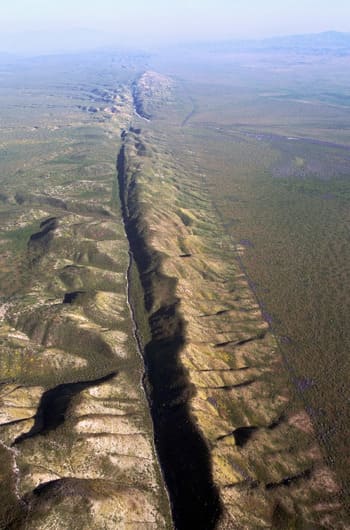
      • Transform boundaries (plates slide past each other, like along California’s San Andreas Fault)
      • Convergent boundaries (plates collide, causing one plate to be forced beneath another)
      • Divergent boundaries (plates move apart, like along mid-ocean ridges)
    • Faults: A fault is a crack in the Earth’s crust where earthquakes are likely to occur. Movement along these faults causes seismic activity.
    • Volcanic Activity: Some earthquakes are linked to volcanic eruptions. As magma moves beneath a volcano, it can cause the ground to tremble.
    • Human Activity: Activities like mining, reservoir-induced seismicity (from the weight of water in large dams), and even fracking can sometimes cause smaller, human-triggered earthquakes, called induced earthquakes.

    How Earthquakes Are Measured

    Scientists measure earthquakes using instruments called seismographs. The strength, or magnitude, of an earthquake is usually reported using the Richter scale or, more commonly today, the Moment Magnitude Scale (Mw). Magnitudes below 3.0 are generally not felt by people, while magnitudes above 7.0 can cause serious damage.

    Why Some Places Are More Prone Than Others

    Regions located along active plate boundaries, like the Pacific “Ring of Fire,” experience more frequent and intense earthquakes. Places like Japan, Indonesia, Chile, and the west coast of the United States are especially vulnerable.

    Meanwhile, areas located far from plate boundaries, known as intraplate regions, usually have fewer earthquakes. However, they are not immune—large intraplate earthquakes can and do occur, just far less frequently.

    Can Earthquakes Be Predicted?

    Despite advances in science and technology, earthquakes cannot be precisely predicted. Scientists can identify regions at higher risk based on historical activity and plate tectonics, but predicting the exact time, location, and magnitude of an earthquake remains beyond our current capabilities.

    Final Thoughts

    Earthquakes are a natural result of our ever-changing planet. Understanding their causes helps scientists develop better building practices, early warning systems, and emergency preparedness plans—all crucial steps in minimizing damage and saving lives when earthquakes strike.

  • How Are Hot Springs Formed?

    How Are Hot Springs Formed?

    Hot springs are one of nature’s most fascinating features, offering steaming pools of mineral-rich water that have attracted people for centuries. But how exactly are hot springs formed? The answer lies deep beneath the Earth’s surface, where heat and water combine in a remarkable geological process.

    The Role of the Earth’s Heat

    At the center of the Earth, temperatures soar to thousands of degrees Celsius. Even closer to the surface, the Earth’s crust contains a surprising amount of residual heat from its formation, as well as heat produced by the decay of radioactive elements. This internal heat is a crucial ingredient in the formation of hot springs.

    In areas where the Earth’s crust is thinner or fractured, this heat can rise more easily. Regions near tectonic plate boundaries or volcanic activity often have increased geothermal energy close to the surface, making them prime locations for hot springs.

    Water’s Journey Underground

    The second essential ingredient for a hot spring is water. Rainwater or melted snow seeps into the ground, traveling through porous rock layers, cracks, and underground aquifers. As the water descends deeper into the Earth, it encounters hotter rocks and naturally heats up.

    Depending on the geology, this water can either slowly warm or quickly reach boiling temperatures. Eventually, pressure from the surrounding rocks or the heated water itself forces the water back toward the surface, emerging as a hot spring.

    Different Types of Hot Springs

    Not all hot springs are created equal. Here are a few variations:

    • Geothermal Hot Springs: These are heated by natural geothermal energy and are the most common type.
    • Volcanic Hot Springs: Located near active or dormant volcanoes, these springs often feature bubbling mud pots and fumaroles, where gases like sulfur rise with the steam.
    • Artesian Hot Springs: In these springs, underground pressure forces water upward without the need for heat from magma or volcanic activity.

    Why Hot Springs Often Contain Minerals

    As water moves through underground rocks, it dissolves minerals like calcium, magnesium, and silica. By the time the heated water reaches the surface, it is often rich in these dissolved minerals, giving many hot springs their characteristic colors and sometimes their therapeutic reputations.

    Famous Hot Springs Around the World

    • Blue Lagoon (Iceland): A geothermal spa famous for its milky-blue mineral waters.
    • Pamukkale (Turkey): Terraced pools created by mineral deposits from flowing hot spring water.
    • Grand Prismatic Spring (USA): Located in Yellowstone National Park, it’s the largest hot spring in the United States and known for its brilliant rainbow colors.

    Conclusion

    Hot springs form through a natural partnership between the Earth’s internal heat and water from the surface. As water dives underground and heats up, it gathers minerals and pressure before bursting back to the surface. Whether used for relaxation, healing, or simply admired for their beauty, hot springs are a striking reminder of the dynamic forces shaping our planet.