Answer Shelf

Tag: Science

  • Why Does Iron Rust, but Aluminum Doesn’t?

    Why Does Iron Rust, but Aluminum Doesn’t?

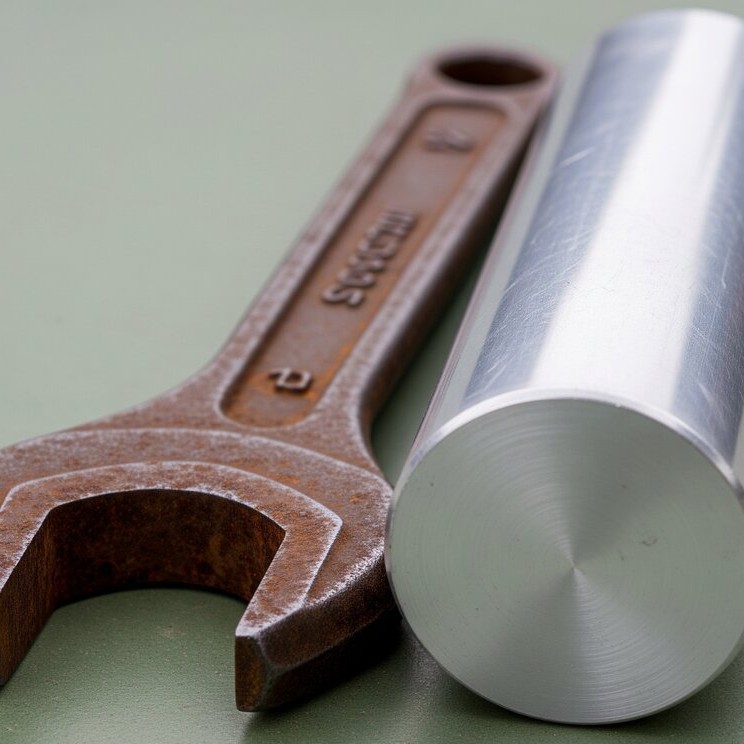
    If you’ve ever left a bicycle out in the rain, you’ve probably seen reddish-brown rust form on its iron parts. Yet aluminum objects left outside seem to remain largely unchanged. So why does iron rust, but aluminum doesn’t seem to? The answer lies in the chemistry of corrosion and how these metals react with oxygen and water.

    What Is Rust?

    Rust is the common name for iron oxide, a flaky, reddish substance that forms when iron reacts with oxygen and moisture. The process is known as oxidation. In particular, iron reacts with both oxygen (O₂) and water (H₂O) from the environment to produce iron oxide (Fe₂O₃·nH₂O), which we recognize as rust.

    The overall chemical reaction looks like this:

    4Fe + 3O₂ + 6H₂O → 4Fe(OH)₃ → Fe₂O₃·nH₂O (rust)

    Rust is porous and weak, so it flakes off, exposing more fresh iron to the environment. This allows the rusting process to continue indefinitely.

    Why Doesn’t Aluminum Rust?

    Aluminum actually does oxidize, but it doesn’t rust in the way iron does. When aluminum comes into contact with oxygen, it forms aluminum oxide (Al₂O₃). The key difference is that this aluminum oxide layer is thin, hard, and tightly bonded to the surface. Instead of flaking off like rust, this protective layer seals the metal underneath from further corrosion.

    In short, aluminum “rusts” in its own way. However, the oxidation actually protects it. This process is called passivation.

    The Role of Passivation

    Passivation is what sets aluminum apart from iron. The oxide layer that forms on aluminum is only a few nanometers thick, but it is incredibly strong. It acts like an invisible shield that prevents moisture and air from reaching the metal below.

    Iron, on the other hand, forms a non-protective oxide layer. As rust flakes off, fresh iron is exposed to the elements, and the cycle continues.

    Can Aluminum Corrode?

    Yes, aluminum can still corrode under certain conditions, such as in the presence of salt water or acidic environments. In such cases, corrosion may appear as pitting, which refers to small, localized holes in the metal. However, this is far less aggressive than the widespread, structural damage caused by iron rusting.

    Protective Measures

    To prevent rust, iron is often coated with paint, oil, or even zinc. This last method is called galvanization. Aluminum usually doesn’t need these protections for general use, although anodizing is sometimes done to thicken the protective oxide layer for added durability or aesthetic appeal.

    Summary

    Iron rusts because it forms a weak, flaky oxide layer that does not protect the metal underneath. Aluminum doesn’t rust the same way because its oxide layer is strong and acts as a barrier. Understanding these differences helps engineers and builders choose the right materials for everything from airplanes to garden furniture.

  • How Do Magnets Work?

    How Do Magnets Work?

    Magnets are part of our everyday lives, from refrigerator doors to phone speakers and even credit cards. But how exactly do they work? The answer lies in physics at the atomic level.

    The Science Behind Magnetism

    Magnetism begins with electrons, the tiny particles that orbit the nuclei of atoms. As electrons move, they generate a small magnetic field. They also have a property called spin, which contributes to magnetism.

    In most materials, the magnetic fields of electrons are randomly oriented and cancel each other out. But in certain materials, such as iron, nickel, and cobalt, many electrons are aligned in the same direction. This creates tiny magnetic regions called domains, where the magnetic effects are combined.

    When a large number of these domains are aligned across a material, the combined magnetic field becomes strong enough to be noticeable. That is when the material acts like a magnet and can attract certain metals or interact with other magnetic fields.

    Types of Magnets

    There are three main types of magnets, each with different properties and uses:

    1. Permanent Magnets
      These materials stay magnetized over time. Examples include bar magnets and fridge magnets. They are made from materials whose domains naturally stay aligned.
    2. Temporary Magnets
      These only act like magnets when they are in the presence of a magnetic field. Remove the field, and they lose their magnetism. A common example is a paperclip that becomes briefly magnetized when touched to a strong magnet.
    3. Electromagnets
      These are created by passing electric current through a wire coil. The magnetic field only exists while electricity is flowing. Electromagnets are used in everything from doorbells and MRI machines to cranes in scrap yards.

    Magnetic Fields and Poles

    Every magnet has two poles: a north pole and a south pole. Opposite poles attract, and like poles repel. The magnetic field, which is the area around a magnet where its force can be felt, flows from the north pole to the south pole.

    This field is invisible, but its shape can be revealed using iron filings, which align themselves along the field lines when sprinkled near a magnet.

    Everyday Uses of Magnets

    Magnets are used in countless ways in modern technology and daily life:

    • Electric motors and generators: Use magnetism to convert energy between motion and electricity.
    • Speakers and microphones: Rely on magnets to move air and produce sound.
    • Credit and debit cards: Store data on magnetic strips.
    • MRI machines: Use strong magnetic fields to take detailed images inside the human body.
    • Compasses: Use Earth’s natural magnetism to point north.

    Can Magnets Lose Their Strength?

    Yes, permanent magnets can lose their magnetism over time, especially if they are exposed to high heat, physical shock, or opposing magnetic fields. However, high-performance magnets like neodymium magnets can stay strong for years under normal conditions.

    Earth Is a Giant Magnet

    The Earth itself acts like a giant magnet because of the movement of molten iron in its outer core. This motion generates a magnetic field that extends into space and protects the planet from solar radiation. It is this field that makes compass needles point north.

    Final Thoughts

    Magnetism may seem mysterious, but it is rooted in the behavior of electrons and the structure of atoms. By understanding how magnets work, we get a glimpse into the powerful forces shaping both technology and nature.

  • Why Do Cats Purr?

    Why Do Cats Purr?

    If you’ve ever curled up next to a cat and heard that gentle, rhythmic rumble coming from its chest, you’ve probably wondered: why do cats purr? While it might seem like a simple sign of contentment, the answer is far more complex and fascinating.

    The Mechanics of a Purr

    Purring begins in the brain, as the brain signals the throat muscles to start moving. These muscles then twitch very quickly, causing the vocal cords to open and close as the cat breathes in and out. This creates the soft, vibrating sound we recognize as a purr.

    What makes it especially interesting is that purring is a voluntary action. In other words, cats actively choose to purr rather than it being a passive process.

    Common Reasons Cats Purr

    1. Contentment and Comfort

    This is the reason most people are familiar with. Cats often purr when they’re relaxed, being petted, or lying in a sunbeam. In these moments, purring is a signal of happiness and calm.

    2. Communication With Humans

    Cats quickly learn that humans respond positively to purring. Some cats even mix a high-frequency cry into their purrs when they want food or attention, which closely resembles the sound of a human baby crying, something we’re instinctively drawn to.

    3. Self-Soothing or Pain Relief

    Interestingly, cats also purr when they’re injured, frightened, or sick. This type of purring may serve as a form of self-soothing or even pain relief. Studies suggest the frequency range of cat purring (25–150 Hz) has been shown to promote tissue healing, reduce swelling, and even stimulate bone repair in both animals and humans.

    4. Mother-Kitten Bonding

    Newborn kittens are blind and deaf, but they can feel vibrations. A mother cat will purr to comfort her kittens, guiding them to her body for warmth and milk. Kittens also start to purr when nursing, which may help strengthen their bond with their mother.

    A Mystery Still in Progress

    Despite all these theories, the full purpose of purring isn’t completely understood. What’s clear is that it’s multifunctional: part expression, part healing tool, part social signal.

    So next time you hear a cat purring, know that it’s not just a sign of pleasure. That little buzz might be a sophisticated form of self-care, a bonding call, or even a subtle request for dinner.

  • How Does A Fire Extinguisher Work?

    How Does A Fire Extinguisher Work?

    When a fire breaks out, a fire extinguisher can be a crucial tool for quickly controlling the situation before it grows. But have you ever wondered how exactly it works? Understanding the mechanics behind a fire extinguisher can make you more confident and effective if you ever need to use one.

    The Basics of Fire

    First, it’s important to know what keeps a fire burning. A fire needs three elements to survive, often referred to as the fire triangle:

    • Heat: Enough to reach the ignition temperature.
    • Fuel: Something that can burn, like wood, paper, or gasoline.
    • Oxygen: From the air around us.

    Remove any one of these three, and the fire can no longer continue.

    How Fire Extinguishers Stop Fires

    Fire extinguishers are designed to disrupt the fire triangle – by removing heat, cutting off oxygen, or stopping the fuel from burning. Different types of fire extinguishers do this in different ways, depending on the kind of fire.

    Here’s how the most common types work:

    1. Water Extinguishers

    Water extinguishers cool the burning material below its ignition temperature. They are best for fires involving ordinary combustibles like paper, wood, or cloth. Important: Water should not be used on electrical or grease fires, as it can cause electrocution or cause the fire to spread.

    2. Foam Extinguishers

    Foam extinguishers both cool the fire and coat the fuel surface, cutting off its contact with oxygen. These are often used for fires involving flammable liquids like gasoline or oil.

    3. Carbon Dioxide (CO₂) Extinguishers

    CO₂ extinguishers release a cloud of carbon dioxide gas, which displaces the oxygen around the fire and smothers it. They are especially useful for electrical fires, as the gas does not conduct electricity and leaves no residue.

    4. Dry Chemical Extinguishers

    These extinguishers spray a fine powder (usually monoammonium phosphate) that interrupts the chemical reaction of the fire. Dry chemical extinguishers are versatile and work on multiple types of fires, including combustibles, flammable liquids, and electrical fires.

    5. Wet Chemical Extinguishers

    Wet chemical extinguishers are primarily used in commercial kitchens. They work by cooling the fire and creating a soapy layer on the burning fat or oil, preventing re-ignition.

    What’s Inside a Fire Extinguisher?

    Inside the cylinder, the fire-extinguishing agent (water, foam, powder, or gas) is stored under pressure. When you pull the pin and squeeze the handle, it opens a valve, releasing the agent with enough force to project it toward the fire. Some extinguishers use a separate gas cartridge to provide the pressure when activated.

    Quick Tips for Using a Fire Extinguisher

    Remember the acronym PASS:

    • Pull the pin.
    • Aim the nozzle at the base of the fire.
    • Squeeze the handle.
    • Sweep from side to side until the fire is out.

    Always make sure you are trained and know when to evacuate instead of fighting the fire yourself.

  • Why Do Old Injuries Hurt When It Rains?

    Why Do Old Injuries Hurt When It Rains?

    Many people claim that they can “feel” the weather changing in their bones, especially when rain is on the way. If you’ve ever noticed an old injury acting up just before a storm, you’re not imagining things. But what causes this mysterious link between the weather and lingering pain?

    The Role of Barometric Pressure

    The leading theory involves barometric pressure, which is the force exerted by the weight of the air in the atmosphere. When a storm is approaching, the barometric pressure drops. This drop can cause tissues in your body, especially around joints and previously injured areas, to expand slightly.

    In areas where the tissue is already sensitive, such as a scar from surgery or an old fracture site, this change can lead to increased pressure on nerves, resulting in pain or discomfort. People with arthritis, for instance, often report more joint pain in rainy or humid conditions due to similar mechanisms.

    How Weather Affects the Body

    Weather doesn’t just affect barometric pressure. Changes in temperature, humidity, and precipitation can all play a role in how the body feels:

    • Cooler temperatures can cause muscles and ligaments to stiffen, making old injuries feel sore or tight.
    • Increased humidity might make joints feel more swollen.
    • Rain and storms often coincide with lower activity levels, which can increase stiffness in previously injured areas.

    Nerve Sensitivity and Inflammation

    Old injuries, particularly those involving nerve damage or long-term inflammation, may become more sensitive over time. When the weather changes, it may trigger a response in the nervous system that heightens pain perception. Even if the structural damage is long healed, the nerves can remain sensitized.

    Additionally, inflammation tends to flare up in response to environmental changes. The tissue around the injury site may become slightly inflamed, leading to a feeling of tightness, swelling, or discomfort.

    Is It All in Your Head?

    While there is scientific support for the relationship between weather and pain, some researchers believe that the connection may also involve psychological factors. Anticipating bad weather or associating pain with rain could amplify one’s awareness of discomfort. Still, a growing body of evidence supports the idea that barometric pressure and related weather changes do have physical effects on the body.

    What You Can Do

    If you’re prone to weather-related aches and pains from old injuries, here are a few tips that may help:

    • Stay warm: Dress in layers and use heating pads on sore areas.
    • Keep moving: Gentle exercise helps maintain joint flexibility.
    • Stay hydrated: Hydration supports joint lubrication and tissue health.
    • Monitor the forecast: If you know rainy weather is coming, plan ahead with pain management strategies like rest, stretching, or medication.

    Final Thoughts

    While the exact science behind why old injuries hurt when it rains is still being explored, the link between weather changes and pain is very real for many people. Whether it’s barometric pressure, inflammation, nerve sensitivity, or all of the above, understanding the connection can help you manage discomfort when the skies turn gray.

  • Why Does Metal Feel Colder Than Wood, Even If They’re the Same Temperature?

    Why Does Metal Feel Colder Than Wood, Even If They’re the Same Temperature?

    You touch a metal doorknob and it feels icy cold. Moments later, you touch a wooden table nearby and it feels warmer. But what if I told you both are actually the same temperature? So why the difference in sensation?

    It’s Not About Temperature – It’s About Heat Transfer

    The key lies in how fast materials transfer heat. Your body is usually warmer than the objects around you. When you touch something, heat flows from your skin to that object. Metal is a great conductor of heat, while wood is a poor one.

    Metal Pulls Heat From You Faster

    Since metal conducts heat very efficiently, it quickly draws warmth away from your skin. That rapid heat loss makes your nerve endings interpret the sensation as “cold,” even though the metal isn’t colder than the wood. It’s just pulling your heat away faster.

    Wood Acts Like Insulation

    Wood, on the other hand, is an insulator. It doesn’t draw heat from your skin quickly. The heat stays near the surface of your skin, so the wood feels closer to your body temperature even if it started out just as cool as the metal.

    It’s the Same Reason a Metal Spoon Feels Colder Than a Plastic One

    The same principle explains why metal cutlery feels colder than plastic in a drawer. Or why sitting on a metal bench in winter feels more shocking than sitting on a wooden one. Metal zaps your warmth away fast, while wood lets you ease into the chill.

    So the next time you flinch at the touch of cold metal, remember, it’s not actually colder than that nearby wood or plastic. It just feels that way because metal steals your body heat much faster. Understanding how materials conduct heat helps explain everyday experiences and reveals just how cleverly our senses interpret the world around us.

  • The Mystery of Bioluminescence: How Living Things Glow

    The Mystery of Bioluminescence: How Living Things Glow

    In the deep sea, where sunlight never reaches, strange creatures drift and dart, glowing softly in shades of blue and green. On land, fireflies light up warm summer nights with brief, twinkling flashes. These phenomena, both mesmerizing and mysterious, owe their beauty to bioluminescence, the ability of living organisms to produce light.

    But what causes this natural glow? And why do so many creatures, from tiny plankton to squid, have this luminous talent?

    What Is Bioluminescence?

    Bioluminescence is the production and emission of light by a living organism. Unlike sunlight or fire, this light is considered “cold” because it does not give off heat. It results from a chemical reaction that usually involves a molecule called luciferin, an enzyme known as luciferase, and oxygen. When luciferin reacts with oxygen, with the help of luciferase, light is produced.

    The color of this glow depends on the organism and its environment. Blue and green are the most common colors, especially in marine life, because these wavelengths travel the farthest through water.

    Who Glows and Why?

    Bioluminescence appears across a wide range of life forms:

    • Marine animals like jellyfish, anglerfish, comb jellies, squid, and certain shrimp use light to survive in the ocean’s darkest depths.
    • Microorganisms such as plankton and bacteria often glow, illuminating waves or beaches at night.
    • Insects like fireflies and some click beetles are well known for their glowing displays.
    • Fungi including a few mushroom species give off a soft, greenish light.

    But this glow isn’t just for show. Bioluminescence serves many purposes, including:

    • Attracting Mates: Fireflies use specific flashing patterns to signal and attract potential partners.
    • Camouflage: Some deep-sea fish match the faint light from the surface above to blend in and avoid detection by predators below.
    • Luring Prey: Anglerfish dangle a glowing lure in front of their mouths to attract unsuspecting prey.
    • Defense Certain squid and shrimp release bioluminescent fluid to startle, confuse, or blind predators, giving them a chance to escape.
    • Communication: Colonies of bioluminescent bacteria emit light to signal their presence to other bacteria nearby.

    How Do Scientists Use Bioluminescence?

    Bioluminescence is more than just a natural wonder. It has become a valuable tool in science. Researchers use bioluminescent markers in medical and genetic studies to observe how cells function, monitor infections, and locate cancerous growths.

    One well-known example is green fluorescent protein (GFP), originally discovered in jellyfish. Scientists can attach GFP to specific genes or proteins to watch biological processes unfold in real time.

    Nature’s Nightlights

    From glowing ocean waves to the flicker of fireflies in the forest, bioluminescence is a stunning reminder of nature’s hidden wonders. Even though science has explained how the glow works, the experience still feels magical.

  • Why Do We Get Motion Sickness?

    Why Do We Get Motion Sickness?

    Motion sickness can sneak up on even the most seasoned travelers, whether you’re riding in a car, flying in a plane, or sailing across open water. That queasy feeling in your stomach, the cold sweat, and the urge to vomit are more than just discomfort. It’s your brain struggling to make sense of mixed signals. But why does this happen, and what exactly causes motion sickness?

    The Battle Between Your Senses

    Your body relies on three main systems to maintain balance and spatial awareness:

    • Inner ear (vestibular system): Detects motion and orientation
    • Eyes (visual input): See where you’re going
    • Proprioception (muscle and joint feedback): Senses body position

    When these systems agree, your brain has no trouble understanding whether you’re moving or standing still. But when they send conflicting signals, problems begin.

    For example, if you’re reading a book in the backseat of a moving car, your eyes see a still page, but your inner ear senses motion. Your brain interprets this mismatch as a sign that something is wrong, possibly even poisoning. To protect you, it triggers nausea and vomiting.

    Why Some People Get It Worse Than Others

    Not everyone experiences motion sickness the same way. Some people are more sensitive due to:

    • Genetics
    • Age (children between 2 and 12 are especially prone)
    • Hormonal changes, such as during pregnancy or menstruation
    • Migraine history, which can increase sensitivity to motion

    Interestingly, astronauts can get motion sickness in zero gravity, and even seasoned sailors may experience it until they adjust to life at sea.

    Symptoms to Watch For

    • Dizziness or light-headedness
    • Nausea or vomiting
    • Sweating
    • Pale skin
    • Yawning or drowsiness

    Symptoms often start with a general sense of discomfort and can escalate if not addressed.

    How to Prevent or Reduce Motion Sickness

    There’s no universal cure, but the following strategies can help:

    • Look at the horizon to align visual and motion signals
    • Sit in the front seat of a car or near the wings on a plane
    • Avoid reading or looking at screens while moving
    • Get fresh air or use a fan
    • Try medications like dimenhydrinate (Dramamine) or meclizine
    • Use acupressure wristbands, which some people find helpful
    • Eat lightly before travel—neither an empty nor an overly full stomach helps

    The Brain’s Way of Playing It Safe

    Though unpleasant, motion sickness is actually a protective response. Throughout human evolution, mixed sensory signals could have indicated poisoning, so the body reacted by trying to expel the contents of the stomach. While that logic doesn’t help much on a modern road trip, it explains why nausea is such a common reaction.

  • Why Do Screens Look Weird When Filmed With a Camera?

    Why Do Screens Look Weird When Filmed With a Camera?

    Ever tried to take a photo or video of your TV, computer, or phone screen, only to end up with strange flickers, rolling lines, or weird color patterns? You’re not alone, and there’s a good reason this happens.

    It’s All About Refresh Rates

    Screens don’t display a single static image. Instead, they refresh the image many times per second, typically 60, 120, or even 240 times. This is known as the refresh rate, measured in hertz (Hz). But your camera has its own timing system, called the frame rate, and when those two rates don’t match, strange things happen.

    Mismatched Timings = Visual Glitches

    Think of a screen refreshing like blinking lights. If your camera catches the screen in between those blinks, you’ll see dark bands or flickers. It’s not that the screen is malfunctioning, it’s just that your camera is capturing moments your eyes can’t normally perceive.

    Moiré Patterns: The Weird Rainbow Effect

    Moiré patterns happen when two repetitive patterns overlap in just the wrong way. Many screens, especially LCDs and OLEDs, are made of tightly packed grids of pixels. Your camera sensor also has its own grid of pixels. When these two grids don’t line up perfectly, they create interference—producing swirling rainbow patterns or wavy lines on your recording.

    These moiré artifacts are more likely when:

    • You’re zoomed in on a high-resolution screen.
    • The screen’s pixel pitch (density) closely matches your camera sensor’s pixel arrangement.
    • You’re recording printed screens (like e-ink or certain LED signs).

    Rolling Shutter Effects

    Most phone and DSLR cameras use something called a rolling shutter, which records an image line by line from top to bottom. If the screen changes while the camera is still capturing, it creates rolling lines or partial images, especially noticeable with fast-refreshing LED or OLED screens.

    PWM and Brightness Flicker

    Some screens use a technique called pulse-width modulation (PWM) to control brightness. It rapidly turns pixels on and off to dim the display. This is invisible to the naked eye, but a camera might pick it up as flickering.

    Why It Varies by Device

    You might notice this effect more with certain screens or phones. That’s because:

    • Different screens have different refresh technologies.
    • Newer cameras with higher frame rates or global shutters can reduce or eliminate the effect.
    • Shooting under artificial lighting (like fluorescent bulbs) can compound the issue due to their own flickering behavior.

    How to Fix or Reduce It

    • Adjust your camera’s shutter speed or frame rate to better sync with the screen’s refresh rate (e.g., 1/60 sec for 60Hz screens).
    • Use manual settings if your device allows it, auto mode often makes things worse.
    • Try a different angle or distance, sometimes even a slight change helps.
    • Use screen recording software if you just want to capture what’s on the screen, glitch-free.

    So, the next time your camera struggles to capture a clean shot of a screen, just know it’s all about timing, and some invisible tech magic.

  • What Is the Difference Between Baking Soda and Baking Powder?

    What Is the Difference Between Baking Soda and Baking Powder?

    Baking soda and baking powder are both leavening agents used in baking to make baked goods rise, but they are chemically different and used in different situations. Understanding the distinction between the two can help ensure your recipes turn out as expected.

    Baking Soda

    Baking soda, or sodium bicarbonate, is a pure chemical compound that needs an acid to activate it. When mixed with an acidic ingredient like lemon juice, vinegar, or yogurt, it produces carbon dioxide gas, which causes the dough or batter to rise.

    How It Works:

    • When baking soda reacts with an acid, it releases carbon dioxide gas.
    • This gas gets trapped in the batter, causing it to expand and rise.
    • Baking soda helps with browning and can also neutralize acids in the recipe.

    When to Use:

    • Baking soda is used in recipes that already contain an acidic ingredient. For example, if your recipe includes buttermilk, vinegar, or chocolate, baking soda is often the leavening agent of choice.
    • It’s commonly used in cookies, cakes, and muffins.

    Important Note:

    • If too much baking soda is used or if it’s not properly neutralized by an acid, it can leave a bitter, soapy taste in the final product.

    Baking Powder

    Baking powder is a mixture of baking soda, cream of tartar (an acid), and a starch (usually cornstarch). It’s designed to release carbon dioxide gas in two stages, hence it’s called a “double-acting” leavening agent.

    How It Works:

    • Baking powder releases carbon dioxide gas when mixed with a liquid and then again when exposed to heat.
    • The first release occurs when the baking powder is mixed into the batter or dough, and the second release happens when the batter is heated in the oven.

    When to Use:

    • Baking powder is used in recipes that do not contain any acidic ingredients, as it already has the acid needed to activate the baking soda.
    • It’s most commonly used in cakes, biscuits, pancakes, and other baked goods.

    Important Note:

    • There are two types of baking powder: single-acting and double-acting. Double-acting is more common, as it provides a more controlled rise during baking.

    Key Differences

    PropertyBaking SodaBaking Powder
    CompositionPure sodium bicarbonateBaking soda, cream of tartar, cornstarch
    ActivationRequires an acidic ingredient to activateContains both acid and base, self-activating
    UseUsed with acidic ingredientsUsed when no acidic ingredient is present
    Rising ActionReleases gas immediately when mixed with acidReleases gas in two stages (with liquid and heat)
    Common UsesCookies, cakes with acidic ingredientsBiscuits, pancakes, cakes without acidic ingredients

    Can You Substitute One for the Other?

    While baking soda and baking powder are both used to help baked goods rise, they are not interchangeable without adjustments. If a recipe calls for one and you don’t have it, you can sometimes substitute, but you’ll need to modify other ingredients to ensure the same outcome.

    • Substituting Baking Powder for Baking Soda: If you need baking soda but only have baking powder, you can use 2-3 times the amount of baking powder. However, you may need to adjust the recipe to account for the extra acidity.
    • Substituting Baking Soda for Baking Powder: If your recipe calls for baking powder and you only have baking soda, you will need to add an acid (like cream of tartar or lemon juice) to activate the soda.

    Conclusion

    Baking soda and baking powder are both crucial in the baking process, but they serve different purposes. Baking soda needs an acid to work, while baking powder contains both an acid and a base. Always ensure you’re using the correct leavening agent for your recipe to achieve the best results.