Answer Shelf

Tag: Science

  • Why Do Your Fingers Get Wrinkly in Water?

    Why Do Your Fingers Get Wrinkly in Water?

    Have you ever noticed that your fingers become wrinkled after spending too much time in the water, whether it’s during a long bath, swim, or even washing the dishes? It’s a peculiar phenomenon that many people experience, but few understand. So, why do our fingers wrinkle in water, and what’s the science behind it?

    The Science Behind Wrinkling

    When you soak in water for a while, the outer layer of skin on your fingers (and toes) absorbs water. This causes it to swell up. At the same time, the blood vessels beneath the skin constrict, pulling the skin tighter and creating the wrinkled appearance. This combination of skin swelling and blood vessel constriction leads to the unique “pruney” look.

    It’s important to note that this effect doesn’t occur when your fingers are in the water for a short time. It typically takes about 5-10 minutes of immersion to see visible wrinkling, with the process continuing to intensify over the next 30 minutes or so.

    Wrinkling and the Nervous System

    Scientists have discovered that wrinkling is not just a passive reaction; it’s actually controlled by the autonomic nervous system (the part of the nervous system responsible for involuntary functions like heartbeat and digestion). This means that the response to water immersion is regulated by the brain and the nervous system, not just by the skin itself.

    The exact reason why the nervous system activates this response isn’t completely understood, but some scientists believe that the wrinkling of fingers was an adaptive trait developed by our ancestors to help them gather food in wet or slippery environments. The wrinkles would create better traction, much like the tread on a tire, making it easier to grip objects in wet conditions.

    When Wrinkling Is More Pronounced

    You might notice that your fingers and toes wrinkle more than other parts of your body when submerged. This is because the skin on the palms of your hands and soles of your feet has a thicker layer of the stratum corneum that absorbs more water and swells more significantly than skin on other parts of the body. Additionally, the autonomic nervous system may be more sensitive in these areas, leading to a stronger wrinkling effect.

    Wrinkling Is Not Permanent

    The good news is that the wrinkling effect is temporary. Once you remove your hands or feet from the water, the skin quickly returns to its normal appearance as the absorbed water evaporates. The entire process typically takes just a few minutes to reverse itself.

    Conclusion

    In conclusion, the wrinkling of fingers and toes in water is a fascinating natural response that involves a combination of skin absorption and nervous system control. While it might seem like a minor, odd occurrence, it likely played an important role in our evolutionary history by helping our ancestors navigate wet environments more efficiently. So, next time your fingers start to prune, you’ll know it’s more than just a quirky side effect of being in water, it’s a unique adaptation designed to give you better grip when you need it most.

  • Why Do Your Ears Pop on Planes?

    Why Do Your Ears Pop on Planes?

    You’re on a flight, the plane starts descending, and suddenly your ears feel like someone stuck cotton balls in them – or worse, they ache. Then comes the “pop” and sweet relief. What’s going on here?

    Pressure vs. Your Ears

    Your ears are constantly balancing pressure between the outside world and the inside of your head. The part that handles this is the Eustachian tube – a small passage connecting your middle ear to the back of your throat.

    Normally, this tube stays closed and opens occasionally when you swallow or yawn. When it opens, it equalizes the pressure in your middle ear with the outside air.

    What Happens on a Plane

    As a plane climbs or descends, the air pressure in the cabin changes rapidly. Your body doesn’t always keep up. When the pressure outside your ear is different from the pressure inside, your eardrum stretches. That’s what causes the discomfort or muffled sensation.

    The “pop” happens when your Eustachian tube finally opens and equalizes the pressure, snapping your eardrum back to normal.

    Tricks to Help Your Ears Pop

    • Swallow frequently. Drinking water or sucking on candy helps.
    • Yawn or fake a yawn. This motion opens the Eustachian tube.
    • Try the Valsalva maneuver. Close your mouth, pinch your nose, and gently blow like you’re trying to breathe out through your nose. This can push air into the middle ear and pop it open.
    • Use filtered earplugs. Special earplugs can help regulate pressure more slowly during takeoff and landing.
    • Stay awake during descent. Your ears can’t adjust as easily if you’re sleeping through it.

    When to See a Doctor

    If your ears stay blocked for more than a day after a flight or you feel pain or dizziness, it might be more than just a pressure imbalance. Infections or fluid buildup could be involved.

    Conclusion

    Understanding why your ears pop on planes isn’t just interesting, it’s practical knowledge that can make your flights more comfortable. By knowing how pressure changes affect your ears and using simple techniques like swallowing or yawning, you can help your body adjust naturally. Remember, if ear discomfort persists after flying, don’t hesitate to consult a medical professional.

  • Do Fish Sleep?

    Do Fish Sleep?

    Fish don’t have eyelids (except for a few deep-sea species), they don’t snuggle up with a blanket, and they certainly don’t snore—so… do they even sleep? Turns out, yes. But fish sleep very differently from how we do.

    What Does Sleep Mean for Fish?

    In animals, sleep is usually defined as a period of rest where the body becomes less responsive to external stimuli. Even without eyelids or a bed, fish still experience this kind of downtime.

    Instead of lying down or closing their eyes, fish enter a resting state. Their metabolism slows down, they stop swimming (or move very little), and they become less responsive to what’s happening around them. This is their version of sleep.

    Signs a Fish Is Sleeping

    • They hover in one spot or rest at the bottom.
    • They become less active or completely still.
    • Their breathing (gill movement) may slow slightly.
    • They may tuck into hiding places or nestle into coral or plants.

    Some fish, like parrotfish, even secrete a mucus bubble around themselves while sleeping to mask their scent from predators. Sleep, but make it stylish.

    Do All Fish Sleep the Same Way?

    Nope. Fish that live in open water often stay semi-alert even while resting, because they have to keep moving to breathe. Others, like reef fish or bottom dwellers, may get longer, deeper rest in safer spots.

    Fish don’t have a set bedtime either. Some sleep at night, while others (like certain species of catfish) rest during the day and become active after dark.

    Can Fish Have Sleep Disorders?

    Strangely, yes. Some lab studies have shown that fish deprived of rest get stressed and confused, just like sleep-deprived humans. They may even show memory issues or slower reactions.

    The Bottom Line

    While fish don’t curl up in bed like we do, they definitely need their rest. Their unique way of sleeping shows how nature has adapted sleep for life underwater. And just like us, fish that don’t get enough rest can become stressed and sluggish. So next time you see your aquarium fish floating quietly in place, remember: they’re probably just catching some well-deserved Z’s!

  • What Makes Popcorn Pop?

    What Makes Popcorn Pop?

    Popcorn might seem like just a humble snack, but it’s got a mini science experiment happening in every kernel. So what’s going on inside that little nugget that turns it from hard and quiet to light and fluffy?

    It’s All About Water and Pressure

    Each popcorn kernel has three key parts: the outer shell (called the pericarp), the soft starchy inside (endosperm), and a small amount of water trapped in the center. That water is the star of the show.

    When you heat the kernel, the water inside turns to steam. Since the shell is tough and mostly waterproof, the steam has nowhere to go. Pressure builds up inside the kernel like a tiny pressure cooker.

    The Pop Moment

    At around 180°C (356°F), the pressure inside the kernel gets too intense for the shell to handle. It bursts open, and the steam escapes rapidly. The soft starch inside expands and cools instantly, puffing out into the familiar shape we know as popcorn.

    That sudden expansion is the “pop” you hear.

    Why Some Kernels Don’t Pop

    Unpopped kernels (a.k.a. “old maids”) usually have either a damaged shell that lets moisture escape or too little water inside to build up enough pressure. Without the steam, there’s no explosive pop.

    Does Popcorn Quality Matter?

    Yes! Fresh popcorn kernels with the right moisture content pop more reliably and give bigger, fluffier results. That’s why old popcorn often leaves more duds behind.

  • What Is Ozempic Face? Understanding the Side Effect Behind the Buzz

    What Is Ozempic Face? Understanding the Side Effect Behind the Buzz

    With the rise in popularity of Ozempic for weight loss, a new term has entered the public conversation: “Ozempic face.” It’s been mentioned by celebrities, dermatologists, and everyday users alike—but what exactly does it mean?

    What Is Ozempic?

    Ozempic is a prescription medication originally developed to treat type 2 diabetes. Its active ingredient, semaglutide, helps control blood sugar and stimulates insulin production. But one of its side effects—significant weight loss—has made it a popular off-label choice for people looking to shed pounds quickly.

    What Is “Ozempic Face”?

    “Ozempic face” is a term coined to describe the facial changes that some people experience after losing a substantial amount of weight rapidly, especially due to semaglutide medications like Ozempic or Wegovy (a similar drug also used for weight loss).

    The most common features of Ozempic face include:

    • Sunken cheeks
    • Sagging or loose skin
    • Hollowed eyes
    • More prominent facial lines and wrinkles

    In short, as fat is lost from the body, it’s also lost from the face—leading to a gaunt or aged appearance in some people.

    Why Does It Happen?

    Fat plays a crucial role in maintaining a youthful look. The cheeks, under-eye area, and temples all contain fat pads that support the skin and give the face a full, smooth appearance. When weight is lost quickly, especially in middle-aged or older adults, the skin often doesn’t bounce back as easily, resulting in sagging or volume loss.

    This isn’t unique to Ozempic—it can happen with any rapid weight loss—but the growing use of semaglutide has spotlighted the issue.

    Who Is Most Affected?

    People in their 40s and older are more likely to notice Ozempic face because their skin’s elasticity is already declining due to age. However, anyone who loses a significant amount of weight quickly—regardless of age—might experience facial changes.

    Can It Be Prevented or Treated?

    There’s no guaranteed way to prevent Ozempic face, but a few strategies may help minimize its effects:

    • Gradual weight loss: Slower weight loss gives your skin more time to adjust.
    • Hydration and skincare: Proper hydration and a good skincare routine can support skin elasticity.
    • Collagen supplements: Some people take collagen to help maintain skin structure, though the science is mixed.
    • Dermatological treatments: Fillers, microneedling, laser therapy, or facelifts are sometimes used to restore volume or tighten loose skin.

    If you’re concerned about facial changes, it’s worth discussing options with a dermatologist or healthcare provider.

    Final Thoughts

    “Ozempic face” may sound like a buzzword, but it reflects a real and often distressing change for those experiencing rapid weight loss. The key takeaway? Weight loss has aesthetic trade-offs, and it’s important to approach it thoughtfully—with attention to both health and self-image. As always, consult with medical professionals before starting or stopping any medication.

  • Why Do Planes Leave White Trails in the Sky?

    Why Do Planes Leave White Trails in the Sky?

    If you’ve ever looked up on a clear day and seen a plane soaring high above, you’ve probably noticed long, white lines stretching behind it. These streaks, often crisscrossing the sky, are called contrails—short for condensation trails. But what causes them, and why do some last longer than others?

    The Science Behind Contrails

    Contrails form when hot, humid exhaust from an airplane’s engines mixes with the much colder, lower-pressure air at high altitudes (typically above 26,000 feet). Jet engines release water vapor as part of the combustion process. When this vapor is released into the frigid atmosphere, it rapidly cools and condenses into tiny ice crystals, creating visible streaks in the sky.

    This process is similar to seeing your breath on a cold day: the moisture in your warm breath condenses when it hits cold air, forming a visible mist.

    Types of Contrails

    Contrails can behave differently depending on altitude, humidity, temperature, and wind. There are generally three types:

    1. Short-lived contrails: These disappear quickly after forming. They occur when the upper atmosphere is dry, causing the ice crystals to evaporate quickly.
    2. Persistent contrails: These linger and can spread out across the sky. This happens when the upper atmosphere is moist, allowing the ice crystals to remain stable for longer.
    3. Persistent spreading contrails: These can grow wider and resemble natural cirrus clouds, sometimes covering large areas of the sky over time.

    Do Contrails Affect the Weather?

    Contrails can contribute to climate change and influence weather patterns. Like natural clouds, they can trap heat in the Earth’s atmosphere. Some studies suggest that frequent contrail formation may have a small warming effect because they increase cloud cover, especially in busy flight corridors.

    Common Myths

    There’s a popular conspiracy theory that claims these trails are “chemtrails”—chemical agents deliberately sprayed by aircraft for secretive purposes. However, there’s no scientific evidence to support this. The white lines you see are simply a result of physics and atmospheric science.

    Why Don’t All Planes Leave Contrails?

    Not all planes create visible trails. Contrail formation depends on the atmospheric conditions at the plane’s cruising altitude. If the air isn’t cold or moist enough, the exhaust won’t condense into visible ice crystals.

    Final Thoughts

    Those white lines tracing across the sky are a fascinating mix of aviation and atmospheric science. They’re not pollution or chemicals, just ice crystals formed by the interaction of jet exhaust and the cold upper atmosphere. So next time you see a contrail, you’ll know you’re witnessing a natural high-altitude phenomenon.

  • How Does Caffeine Keep You Awake?

    How Does Caffeine Keep You Awake?

    You down a cup of coffee to power through your morning meeting, or maybe it’s your third cup by now. But have you ever wondered how caffeine actually keeps you awake? And why it sometimes feels like your coffee isn’t doing much anymore?

    Meet Adenosine: The Sleepy Molecule

    Your body produces a chemical called adenosine throughout the day. The longer you’re awake, the more adenosine builds up. It binds to specific receptors in your brain, signaling that it’s time to chill out and eventually fall asleep.

    Enter caffeine—the ultimate adenosine impostor.

    How Caffeine Works

    Caffeine looks a lot like adenosine to your brain cells. So when you drink coffee, tea, or energy drinks, caffeine binds to those same adenosine receptors. But instead of making you sleepy, it blocks the signal, keeping your brain alert.

    It doesn’t give you energy per se, it just prevents you from realizing how tired you are.

    Why It Wears Off

    Caffeine doesn’t stay in your system forever. Your liver gradually breaks it down, and once it’s gone, all the adenosine that’s been building up can finally bind to its receptors. This often causes that familiar drop in energy, known as the caffeine crash.

    Tolerance Is a Thing

    If you’re a regular caffeine consumer, your body gets smart. It starts creating more adenosine receptors, meaning it takes more caffeine to block the same amount of sleepiness. That’s why your “one cup a day” habit can quickly turn into “four cups and a Red Bull.”

    Can You Reset Your Caffeine Tolerance?

    Yep! But it takes a bit of time and willpower. Cutting back or going caffeine-free for a while can reduce those extra receptors and make caffeine work better when you return.

  • Why Do Onions Make You Cry?

    Why Do Onions Make You Cry?

    It’s one of life’s little kitchen mysteries: you slice into an onion, and suddenly your eyes start stinging and tears start streaming. But why does this happen—and is there any way to stop it?

    Let’s peel back the layers and take a closer look.

    The Culprit: Onion Chemistry

    Onions contain a variety of natural chemicals that help protect them from pests and microbes. When you chop an onion, you break open its cells, causing a chain reaction of chemical events:

    1. Enzymes are released: Cutting the onion damages its cells, releasing an enzyme called alliinase.
    2. Sulfur compounds are formed: Alliinase reacts with sulfur-containing amino acids in the onion, producing a gas called syn-Propanethial-S-oxide.
    3. The gas reaches your eyes: This gas evaporates quickly and drifts upward into your eyes.
    4. Tears start flowing: When the gas reaches your eyes, it reacts with the water in your tear film to form a mild sulfuric acid. Your eyes respond by producing tears to flush the irritant out.

    In short, your eyes cry because they’re trying to protect themselves from the chemical irritant created by the onion’s natural defense system.

    Why Some Onions Make You Cry More Than Others

    Not all onions are equally tear-inducing. Some factors that affect how much they make you cry include:

    • Type of onion: Yellow onions usually cause the most tears, while sweet onions, red onions, and green onions tend to be milder.
    • Freshness: Older onions may have a stronger chemical buildup.
    • Growing conditions: Onions grown in sulfur-rich soil can contain more tear-producing compounds.

    Can You Stop the Tears?

    Yes—at least reduce them! Here are a few science-backed tips:

    • Chill the onion first: Cooling onions slows down the enzymes and reduces the amount of irritant gas released.
    • Use a sharp knife: A dull knife crushes more cells, releasing more enzymes.
    • Cut under a vent or fan: Directing air away from your face helps carry the gas away from your eyes.
    • Try goggles: It might look silly, but airtight goggles can block the gas from reaching your eyes.
    • Cut under water: This method can trap the irritant, although it’s a bit tricky to do.

    Conclusion

    Onions make you cry because of a natural chemical reaction that releases a gas irritating to your eyes. While it’s annoying, it’s harmless—and luckily, there are ways to minimize the tears. So next time you’re prepping for dinner, use a sharp knife, chill your onion, and keep those goggles handy!

  • How Does Sunscreen Actually Work?

    How Does Sunscreen Actually Work?

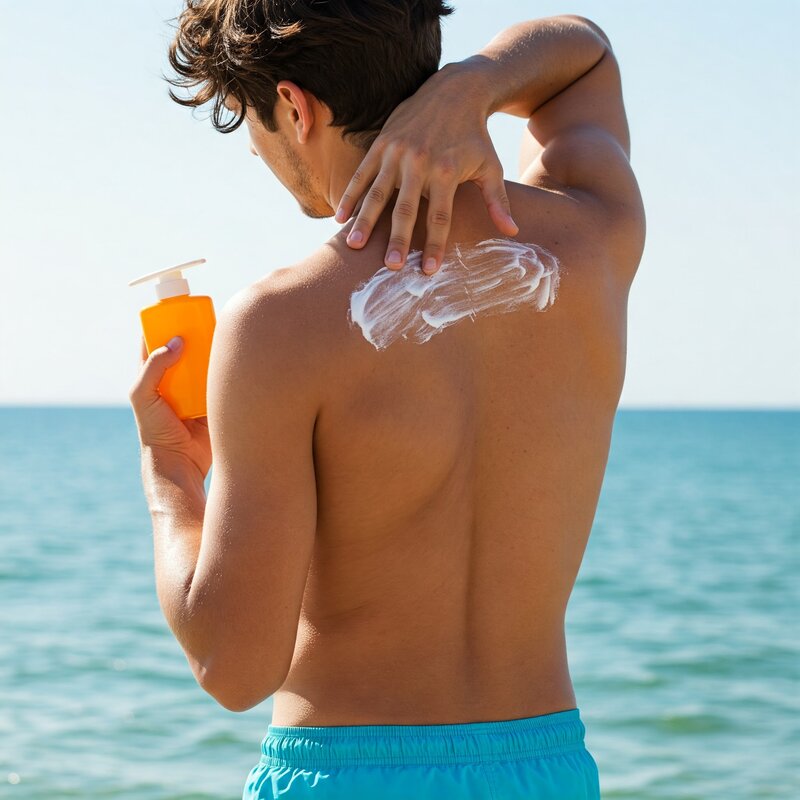
    Sunscreen is a must-have in any skincare routine, especially when spending time outdoors. But have you ever wondered how that lotion or spray actually protects your skin from the sun’s rays? Let’s break it down.

    Understanding UV Rays

    The sun emits ultraviolet (UV) radiation, which comes in two main types that affect your skin:

    • UVA rays: These penetrate deep into the skin and are associated with premature aging, wrinkles, and some types of skin cancer.
    • UVB rays: These affect the surface layers of the skin and are the main cause of sunburn. UVB is also linked to skin cancer.

    Both types can damage your DNA, increasing the risk of skin cancer over time. That’s where sunscreen comes in.

    How Sunscreen Works

    Sunscreens protect the skin by using active ingredients that either absorb, reflect, or scatter UV radiation before it can penetrate the skin.

    1. Chemical Sunscreens

    These use organic (carbon-based) compounds like avobenzone, oxybenzone, or octinoxate. They absorb UV rays and convert them into harmless heat.

    • How they work: Think of them as tiny sponges absorbing the sun’s energy.
    • Best for: Daily wear, as they’re often lightweight and invisible on the skin.

    2. Physical (Mineral) Sunscreens

    Physical sunscreens contain active mineral ingredients like zinc oxide and titanium dioxide. Contrary to the common myth that they mostly reflect UV rays, recent studies show that they primarily absorb UV radiation — just like chemical sunscreens. A small amount of UV radiation is also reflected or scattered.

    • How they work: These minerals absorb the majority of incoming UV rays and convert them into harmless heat. Only a minor fraction is deflected.
    • Best for: Sensitive skin, as mineral sunscreens tend to be less irritating and are often recommended for children and people with skin conditions.

    What Does SPF Mean?

    SPF stands for Sun Protection Factor. It indicates how long you can stay in the sun without burning compared to no protection.

    • For example, SPF 30 means you can theoretically stay in the sun 30 times longer without burning.
    • However, no sunscreen blocks 100% of UV rays. SPF 30 blocks about 97%, while SPF 50 blocks about 98%.

    SPF mainly measures protection against UVB rays. To ensure full coverage, choose sunscreens labeled “broad spectrum,” which protect against both UVA and UVB.

    Why Reapplication Matters

    Sunscreen can wear off due to:

    • Sweat
    • Swimming
    • Towel drying
    • Natural breakdown over time

    To stay protected, reapply sunscreen every 2 hours, or immediately after swimming or sweating.

    Tips for Effective Use

    • Apply generously — most adults need about a shot glass full for full-body coverage.
    • Don’t forget spots like ears, the back of the neck, tops of feet, and lips.
    • Use it every day — UV rays can damage skin even on cloudy days or through windows.

    Conclusion

    Sunscreen is a powerful tool that protects your skin by absorbing — and to a lesser extent, reflecting — harmful UV rays before they can cause damage. Both chemical and mineral sunscreens work primarily by absorbing ultraviolet radiation and converting it into harmless energy. Choosing the right sunscreen and applying it correctly and consistently is one of the most effective ways to maintain healthy skin and prevent long-term sun damage.

  • How Do X-Rays Work?

    How Do X-Rays Work?

    X-rays are one of the most important tools in modern medicine, allowing doctors to see inside the human body without surgery. But how exactly do these powerful rays work? Let’s break it down.

    What Are X-Rays?

    X-rays are a type of electromagnetic radiation, just like visible light, but with much higher energy. Because of their energy levels, X-rays can pass through most objects, including the human body. However, they don’t pass through everything equally — and that’s the key to how X-ray imaging works.

    How X-Ray Imaging Works

    When you get an X-ray, a machine sends a controlled amount of X-ray radiation through your body. On the other side is a detector (either traditional photographic film or a digital sensor) that captures the pattern of X-rays that make it through. As the X-rays pass through your body, different tissues absorb different amounts of radiation.

    • Dense materials like bone absorb more X-rays, so fewer rays reach the detector behind them. On the resulting image, these areas appear white or very light.
    • Softer tissues like muscles and organs allow more X-rays through, so those areas appear in shades of gray.
    • Air, like in your lungs, absorbs very little, so it appears black.

    This contrast allows doctors to spot fractures, infections, tumors, and other conditions quickly and non-invasively.

    Are X-Rays Safe?

    In general, the amount of radiation used in a typical X-ray is very low and considered safe for most people. However, repeated exposure over time can increase the risk of cancer, which is why medical professionals use them only when necessary and protect sensitive parts of the body with lead aprons when appropriate.

    Special care is also taken with pregnant individuals, as developing fetuses are more sensitive to radiation.

    Beyond Broken Bones: Other Uses of X-Rays

    While we often think of X-rays in connection with broken bones, they have many other uses, including:

    • Chest X-rays to diagnose pneumonia, lung cancer, or heart problems
    • Dental X-rays to find cavities and monitor oral health
    • Mammograms to screen for breast cancer
    • Security scans at airports to inspect luggage

    X-rays are also used in advanced imaging techniques, such as CT scans, which create detailed cross-sectional images of the body.

    In Short

    X-rays are a powerful form of light that can pass through your body, revealing what’s inside. Their ability to show the differences between bone, tissue, and air has made them an essential tool in healthcare — helping diagnose and treat countless conditions safely and efficiently.