Answer Shelf

Tag: Travel

  • Why Do Planes Leave White Trails in the Sky?

    Why Do Planes Leave White Trails in the Sky?

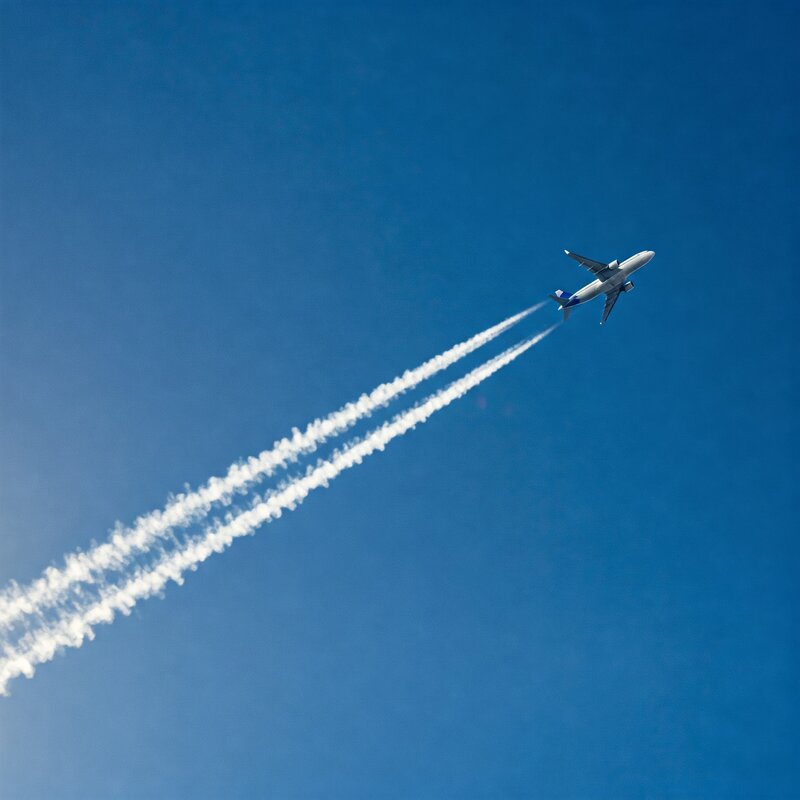
    If you’ve ever looked up on a clear day and seen a plane soaring high above, you’ve probably noticed long, white lines stretching behind it. These streaks, often crisscrossing the sky, are called contrails—short for condensation trails. But what causes them, and why do some last longer than others?

    The Science Behind Contrails

    Contrails form when hot, humid exhaust from an airplane’s engines mixes with the much colder, lower-pressure air at high altitudes (typically above 26,000 feet). Jet engines release water vapor as part of the combustion process. When this vapor is released into the frigid atmosphere, it rapidly cools and condenses into tiny ice crystals, creating visible streaks in the sky.

    This process is similar to seeing your breath on a cold day: the moisture in your warm breath condenses when it hits cold air, forming a visible mist.

    Types of Contrails

    Contrails can behave differently depending on altitude, humidity, temperature, and wind. There are generally three types:

    1. Short-lived contrails: These disappear quickly after forming. They occur when the upper atmosphere is dry, causing the ice crystals to evaporate quickly.
    2. Persistent contrails: These linger and can spread out across the sky. This happens when the upper atmosphere is moist, allowing the ice crystals to remain stable for longer.
    3. Persistent spreading contrails: These can grow wider and resemble natural cirrus clouds, sometimes covering large areas of the sky over time.

    Do Contrails Affect the Weather?

    Contrails can contribute to climate change and influence weather patterns. Like natural clouds, they can trap heat in the Earth’s atmosphere. Some studies suggest that frequent contrail formation may have a small warming effect because they increase cloud cover, especially in busy flight corridors.

    Common Myths

    There’s a popular conspiracy theory that claims these trails are “chemtrails”—chemical agents deliberately sprayed by aircraft for secretive purposes. However, there’s no scientific evidence to support this. The white lines you see are simply a result of physics and atmospheric science.

    Why Don’t All Planes Leave Contrails?

    Not all planes create visible trails. Contrail formation depends on the atmospheric conditions at the plane’s cruising altitude. If the air isn’t cold or moist enough, the exhaust won’t condense into visible ice crystals.

    Final Thoughts

    Those white lines tracing across the sky are a fascinating mix of aviation and atmospheric science. They’re not pollution or chemicals, just ice crystals formed by the interaction of jet exhaust and the cold upper atmosphere. So next time you see a contrail, you’ll know you’re witnessing a natural high-altitude phenomenon.

  • How Are Hot Springs Formed?

    How Are Hot Springs Formed?

    Hot springs are one of nature’s most fascinating features, offering steaming pools of mineral-rich water that have attracted people for centuries. But how exactly are hot springs formed? The answer lies deep beneath the Earth’s surface, where heat and water combine in a remarkable geological process.

    The Role of the Earth’s Heat

    At the center of the Earth, temperatures soar to thousands of degrees Celsius. Even closer to the surface, the Earth’s crust contains a surprising amount of residual heat from its formation, as well as heat produced by the decay of radioactive elements. This internal heat is a crucial ingredient in the formation of hot springs.

    In areas where the Earth’s crust is thinner or fractured, this heat can rise more easily. Regions near tectonic plate boundaries or volcanic activity often have increased geothermal energy close to the surface, making them prime locations for hot springs.

    Water’s Journey Underground

    The second essential ingredient for a hot spring is water. Rainwater or melted snow seeps into the ground, traveling through porous rock layers, cracks, and underground aquifers. As the water descends deeper into the Earth, it encounters hotter rocks and naturally heats up.

    Depending on the geology, this water can either slowly warm or quickly reach boiling temperatures. Eventually, pressure from the surrounding rocks or the heated water itself forces the water back toward the surface, emerging as a hot spring.

    Different Types of Hot Springs

    Not all hot springs are created equal. Here are a few variations:

    • Geothermal Hot Springs: These are heated by natural geothermal energy and are the most common type.
    • Volcanic Hot Springs: Located near active or dormant volcanoes, these springs often feature bubbling mud pots and fumaroles, where gases like sulfur rise with the steam.
    • Artesian Hot Springs: In these springs, underground pressure forces water upward without the need for heat from magma or volcanic activity.

    Why Hot Springs Often Contain Minerals

    As water moves through underground rocks, it dissolves minerals like calcium, magnesium, and silica. By the time the heated water reaches the surface, it is often rich in these dissolved minerals, giving many hot springs their characteristic colors and sometimes their therapeutic reputations.

    Famous Hot Springs Around the World

    • Blue Lagoon (Iceland): A geothermal spa famous for its milky-blue mineral waters.
    • Pamukkale (Turkey): Terraced pools created by mineral deposits from flowing hot spring water.
    • Grand Prismatic Spring (USA): Located in Yellowstone National Park, it’s the largest hot spring in the United States and known for its brilliant rainbow colors.

    Conclusion

    Hot springs form through a natural partnership between the Earth’s internal heat and water from the surface. As water dives underground and heats up, it gathers minerals and pressure before bursting back to the surface. Whether used for relaxation, healing, or simply admired for their beauty, hot springs are a striking reminder of the dynamic forces shaping our planet.

  • How Do Airplanes Stay in the Sky?

    How Do Airplanes Stay in the Sky?

    Airplanes are massive machines made of metal—so how do they stay up in the sky instead of falling to the ground? The answer lies in physics, clever engineering, and four key forces that work together to make flight possible.

    The Four Forces of Flight

    To understand how airplanes stay in the air, you need to know about these four forces:

    1. Lift – The upward force that keeps the plane in the sky
    2. Weight (Gravity) – The downward pull of Earth
    3. Thrust – The forward push that moves the plane
    4. Drag – The resistance that slows the plane down

    Let’s break these down.

    1. Lift

    Lift is what holds an airplane up. It’s created by the wings. When a plane moves forward, air flows faster over the curved top of the wing and slower under the flat bottom. According to Bernoulli’s Principle, faster air creates lower pressure—so the higher pressure under the wing pushes it up. This upward force is called lift.

    2. Weight

    Gravity pulls everything toward Earth. An airplane’s weight works against lift. To fly, the plane must create enough lift to overcome its weight.

    3. Thrust

    Thrust is the force that moves the airplane forward. It’s produced by the engines or propellers. As the plane speeds up, more air flows over the wings, helping generate lift.

    4. Drag

    Drag is the air resistance that slows the plane down—like wind pushing against your hand when you hold it out of a moving car window. Airplane shapes are designed to reduce drag and help them fly more efficiently.

    How Do Pilots Control the Plane?

    Airplanes have control surfaces (like flaps and rudders) on the wings and tail. These help the pilot change the plane’s direction—up, down, or side to side.

    • Ailerons control roll (tilting the wings)
    • Elevators control pitch (up and down)
    • Rudder controls yaw (left and right)

    So, How Does It All Work Together?

    When a plane speeds down the runway, the engines create thrust. Air flows over the wings, generating lift. Once lift is greater than the plane’s weight, it takes off. In the air, the pilot balances lift, thrust, weight, and drag to keep the plane flying smoothly.


    Summary: Airplanes stay in the sky thanks to lift, which is created by the wings. This lift, combined with thrust from the engines, overcomes gravity and air resistance, allowing the plane to fly safely through the air.

  • What Is Travel Insurance and Do You Really Need It?

    Travel insurance is one of those things people often overlook—until they need it. Whether you’re planning a weekend getaway or a month-long international adventure, understanding what travel insurance covers and whether it’s worth the investment can save you from financial and emotional stress later on.

    What Is Travel Insurance?

    Travel insurance is a policy you purchase to protect yourself from unexpected events that can disrupt your trip. These can include medical emergencies, trip cancellations, lost luggage, delays, and more. It acts as a safety net, offering reimbursement or support when things go wrong while you’re away from home.

    What Does Travel Insurance Typically Cover?

    Coverage varies depending on the plan, but most travel insurance policies include:

    • Trip Cancellation/Interruption: Reimburses you if you need to cancel or cut your trip short due to illness, weather, or other covered reasons.
    • Emergency Medical Coverage: Covers medical expenses if you get sick or injured while traveling, especially important if your regular health insurance doesn’t work abroad.
    • Medical Evacuation: Covers transportation to a hospital or back home in case of serious illness or injury.
    • Lost or Delayed Baggage: Provides compensation for lost, stolen, or delayed bags.
    • Travel Delays: Reimburses costs for hotel stays, meals, and transportation during long delays.
    • Accidental Death or Dismemberment: A benefit paid out to your beneficiary in case of a serious accident.

    Optional add-ons may include coverage for adventure sports, rental cars, or cancel-for-any-reason policies.

    When Do You Really Need Travel Insurance?

    While travel insurance isn’t legally required, it’s strongly recommended in situations like:

    • International travel: Especially to countries with expensive or limited healthcare.
    • Expensive or prepaid trips: Such as cruises, safaris, or luxury tours.
    • Travel during unpredictable seasons: For instance, hurricane season or winter travel.
    • Traveling with medical conditions: In case of a sudden flare-up or complication.
    • Trips involving risky activities: Like skiing, hiking, or scuba diving.

    If your trip is short, inexpensive, and close to home, you may not need full coverage, but it’s still wise to have emergency medical protection at the very least.

    What Travel Insurance Doesn’t Cover

    Travel insurance isn’t a free pass for every mishap. It usually won’t cover:

    • Known or pre-existing conditions (unless specified)
    • Risky behavior (like injuries under the influence)
    • Cancellations for uncovered reasons unless you buy cancel-for-any-reason (CFAR) coverage
    • Political unrest or government travel advisories if purchased after they were announced

    Always read the fine print before you buy.

    How to Choose the Right Policy

    Consider the following before buying a plan:

    • Destination and local healthcare situation
    • Length and cost of your trip
    • Your existing coverage (credit cards and health insurance might offer partial benefits)
    • Planned activities (adventure sports, remote travel, etc.)

    Compare plans using reputable travel insurance providers or aggregator websites to find one that fits your needs and budget.

    Final Thoughts

    Travel insurance might feel like an extra expense, but it can offer priceless peace of mind. From covering an unexpected hospital visit to salvaging a canceled trip, it’s one of the smartest investments for any traveler—especially when heading far from home. Think of it as your safety parachute: you hope you never need it, but you’ll be glad it’s there if you do.

  • How to Travel Light: Essentials for Any Trip

    Traveling light can transform your entire travel experience. Less to carry means less stress, more mobility, and fewer chances of lost items. Whether you’re heading on a weekend getaway or a long-term adventure, packing light doesn’t mean sacrificing comfort or style—it means packing smart. Here’s how to do it.

    1. Choose the Right Bag

    Start with a lightweight carry-on-sized backpack or suitcase. Look for one with plenty of compartments and a size that meets most airline cabin restrictions. A 30–40L backpack usually does the trick for short to medium-length trips.

    2. Pack Versatile Clothing

    Go for items that mix and match easily. Stick to a color palette so everything works together. Prioritize:

    • Lightweight, breathable fabrics
    • Quick-dry materials
    • Layers instead of bulky items
    • One or two pairs of shoes at most (wear the bulkier one)

    For a one-week trip, you can often get by with:

    • 2–3 tops
    • 2 bottoms
    • 1 dress or smarter outfit (if needed)
    • 1 light jacket or sweater
    • 1 set of sleepwear
    • 4–5 pairs of underwear and socks

    3. Minimize Toiletries

    Bring only what you truly need and opt for travel-size containers. Remember that many accommodations provide basics like shampoo and soap. A typical minimalist kit includes:

    • Toothbrush and toothpaste
    • Travel-size deodorant
    • A small comb or brush
    • Face wash and moisturizer
    • Sunscreen
    • Any medications or prescriptions

    Tip: Consider solid toiletries like shampoo bars and solid perfumes to save space and meet airline liquid restrictions.

    4. Use Packing Cubes or Compression Bags

    These help organize your items and maximize your space. They also make it easier to unpack and repack without creating chaos.

    5. Limit Electronics

    Only bring devices you’ll genuinely use. For many travelers, a smartphone, charger, and universal adapter are all that’s needed. If you need more:

    • Consider a lightweight tablet or e-reader instead of a laptop
    • Carry headphones instead of bulky over-ear models

    6. Don’t Forget Travel Documents and Essentials

    Keep a small pouch or organizer for:

    • Passport
    • Travel tickets or confirmations
    • Copies of your ID and itinerary
    • A pen (very handy for customs forms)
    • Emergency cash and credit cards

    7. Wear Your Heaviest Items

    If you’re bringing boots, a heavy jacket, or jeans, wear them during your travel days. This saves luggage space and keeps you warm in chilly airports or planes.

    8. Do a Final Review

    Before you zip up your bag, lay everything out and ask yourself:

    • Have I used this item on past trips?
    • Can I get this easily at my destination if needed?
    • Is it worth the space and weight?

    If not, leave it behind.

    Final Thoughts

    Packing light is a skill that improves with each trip. It frees you from baggage fees, long check-in lines, and heavy lifting. With the right essentials and a little planning, you’ll have everything you need and nothing you don’t.

  • What to Do If You Lost Your Passport While Traveling

    Losing your passport while traveling can feel like a nightmare, but don’t panic—you’re not alone, and there’s a clear path to getting back on track. Here’s a step-by-step guide on what to do if your passport is lost or stolen while you’re abroad.

    1. Stay Calm and Double-Check

    Before jumping into action, take a deep breath and double-check your belongings. Search your bags, hotel room, and any recent locations you may have visited. Sometimes, passports turn up in jacket pockets or forgotten compartments in a backpack.

    2. Report the Loss to Local Authorities

    If you’re certain it’s lost or stolen, file a police report as soon as possible. This not only creates an official record but may also help protect you from identity theft. Some embassies will require a police report to issue a replacement.

    3. Find the Nearest Embassy or Consulate

    Locate the nearest embassy or consulate of your home country. They are your lifeline in this situation. Visit their official website or use a government travel app to find contact details and office hours.

    • Pro tip: Always travel with digital or photocopies of your passport, visa, and other ID. They’ll speed up the replacement process.

    4. Prepare the Required Documents

    To get an emergency passport or replacement, you’ll typically need:

    • A passport photo (most embassies will guide you to a nearby studio)
    • Proof of citizenship (birth certificate, photocopy of your old passport, etc.)
    • A police report (if applicable)
    • A completed passport application form
    • A travel itinerary (e.g., flight tickets)
    • Payment for the replacement fee

    Check your embassy’s website for specific requirements.

    5. Apply for an Emergency Passport

    If you’re traveling soon, request an emergency travel document (also called an emergency passport). This will usually be valid only for a short time or for direct travel home. If you have more time and plan to continue traveling, ask for a full-validity replacement passport.

    6. Inform Your Airline or Travel Provider

    Some countries require travelers to show a valid passport when checking in or boarding a flight. Inform your airline about your situation—they may offer guidance or flexibility with your booking.

    7. Watch for Identity Theft

    A lost or stolen passport can lead to identity theft. Once home, monitor your bank accounts and consider placing a fraud alert with your credit bureaus. In some countries, you can also report your passport as stolen to immigration authorities.

    8. Update Travel Insurance

    If you have travel insurance, notify them as soon as possible. Your policy may cover passport replacement costs or related expenses like accommodation or rescheduled flights.

    Final Thoughts

    Losing your passport abroad is stressful, but with quick action and the help of your embassy, it’s usually a manageable bump in the road. Always travel with backup copies of important documents, and keep emergency contacts saved in your phone and email. Safe travels!